Do you have a question for DogtorYakoo regarding how he learns or how we communicate with him, check in regularly to this page? Or hashtag us with our YakooTalks411 on many social media platforms.
Questions you might have on double merles, health/wellness, or traveling with your special friend, use our SUVYakooBlog. We add posts on there daily.
STORY OF DOG LANGUAGES — TACTILE CARE
Blind and deaf dogs generally rely on a combination of touch and tap commands that must be taught in order for them to understand what is expected. As unbelievable as it sounds, these approaches are not limited to helping dogs born blind and deaf. Nor should it be surprising to those who become blind and deaf later in their lives.
Most dogs are born blind and live at first with their ears closed. They enter the world dependent on their senses, including their noses first and foremost — an important recognition if you want to be successful as a loved one and teacher to your ULTRA SPECIAL, special-needs companion.
FIRST THINGS FIRST: No one in Yakoo’s Family is a professional trainer of dogs. Neither of us knew much about having a blind and deaf dog when we fell in love with Yakoo. This meant that we had to learn what was required. And it quickly became apparent to us that we would have to develop and practice a ton of new cues that we’d have to design ourselves.
The dog training world misunderstands or underestimates blind and deaf animals. This causes poor teaching and learning materials — a bit of a problem for many of us.
To begin creating our family’s plan to make our own language, Erick took the lead. He studied an incredible number of online written and video materials as well as a lot of books. He found out from most of these resources that their advice typically revolves around the assumption that blind and deaf dogs need constant, never-changing environments to live and thrive in.
We discovered immediately that this is not true for many. We knew from early on that it was very much NOT what Yakoo wanted, nor what we wished for him.
Yakoo is a smart, inquisitive beast who loves to interact with all of the wonders around him. Figuring out how to make use of his natural inclinations became our first priority. Yakoo needs this sense of adventure, and we believe other dogs like him need to become comfortable with all of the changing mysteries that abound.
To prepare to understand and teach our guy, Erick dug deeply into all kinds of informational resources relating to TACTILE CARE. Human to pet connections — hands or paws on support! — is vital. Here’s where we learned a lot …
- He found and read books on training dogs, on the wonders of special needs dogs, and writings on the ways that others helped blind or deaf ANIMALS in general.
- He also turned to studying websites and books on what it is like to interact and communicate with blind and deaf PEOPLE. People, like dogs, who lack sight and hearing are similar in many ways to dogs that demand skills with their sense of smell and touch.
- And, he then turned to connecting with and building a community of others who had any interest in blindness and deafness of whatever sort. It was this online sense of togetherness that led us to believe that social media has a place that needs to be better used for caring and education.
Why All this?
PUT SIMPLY: THERE ARE TOO FEW EXPERTS WHO ARE REALLY GOOD AT WORKING WITH DOGS LIKE DOGTOR YAKOO. Most may work with blind OR deaf dogs or other animals, but seldom do they have comfort with pets lacking two major kinds of sensory input. Even most vets tend to see one kind of dog or the other. And most educational materials that these folks rely on emphasize that dogs like Yakoo cannot easily handle change. Their home and lifestyles have to remain constant and unchanging we are regularly told.
Fortunately, this isn’t how the real world works. Blind and deaf dogs like Yakoo can learn to appreciate and value our dynamic world if we learn to show them how to do so.
We could tell immediately that Yakoo loves being emersed in his surrounding. Yes, he bumps into things and struggles with not yet understanding what we are trying to tell him. But this is because what tap and touch commands work best have not been well enough refined. We don’t yet know what he knows and he doesn’t know what we want … though he gets better at appreciating our efforts daily.
Taking him on an amazing cross-country road trip is how we decided to address this. We believe that during the hours that we are in our SUV together, as well as the many stops and overnight says we experience, will provide him with the chance to learn more. And not only that, we believe it will give him the confidence and courage to be comfortable and comforting to other people and dogs he encounters.
Our goal is to test this and then to turn what we learn into better teaching, training, and support tools and tactics for all dogs — blind and deaf ones included. If we succeed as a family, many other families will benefit too, as might the world as a whole.
Before jumping into the idea of traveling and teaching, we tried a number of regular educational models. We enrolled him in a puppy class filled with hearing and sighted dogs. We even tried to use methods like vibration collars and such. But what we quickly found out was that Yakoo is his own kind of animal. Vibration collars can get Yakoo’s attention, but that doesn’t mean he knows how to return to find us. Yakoo didn’t know where to go once he was “shocked” to get his attention. We knew there had to be other ways to approach the challenges.
There’s a lot of information about these kinds of biases and preconceptions. Lots of pet owners with “paws on” experience often find that what they are led to believe doesn’t work for them and their pets. Take a look, for example — though we still recommend them — at these posting from the American Kennel Association:
- https://www.akc.org/expert-advice/health/how-to-help-a-blind-dog/
- https://www.akc.org/expert-advice/health/supporting-blind-dogs-how-to-adjust/
As you review these, pay attention to the heartfelt confessions that can be seen from those who have their own experiences with generally accepted standards and practices. Many contain telling insights like this …
Naively, I thought his blindness would dramatically change his life. … It turns out, I had a much harder time than he did adjusting to his blindness. Initially, it was hard for me to realize that this dog who had saved my life wasn’t able to see me anymore. But, once I stopped feeling sorry for him (and myself), I was able to recognize that he wasn’t struggling or afraid. Watching my blind dog continue to love life, train, earn trick titles, hike, and surf—all while not being able to see—has inspired me to teach others not to shortchange blind dogs of any age.
It is from this understanding that we decided to set about determining whether other learning choices might be better. The COVID isolation has mostly past and it is now easier to travel the country and open up all kinds of educational classrooms for curious animals like Dogtor Yakoo.
The traveling we’re about to start will be a learning laboratory. All of the wisdom and struggles we encounter will be pulled together to make suggestions for better ways and means to approach assisting blind and deaf pets. In addition, we’re sure that the pictures and videos we make will prove what recognized professionals like Cesar Millan believe: That all dogs have their own styles and personalities. And the best way to turn these characteristics into useful advantages is by being calm, confident, and assertive as we enter our dog’s world. Once we achieve this level of comfort, we’ll all be on a better road to a lifetime of progress.
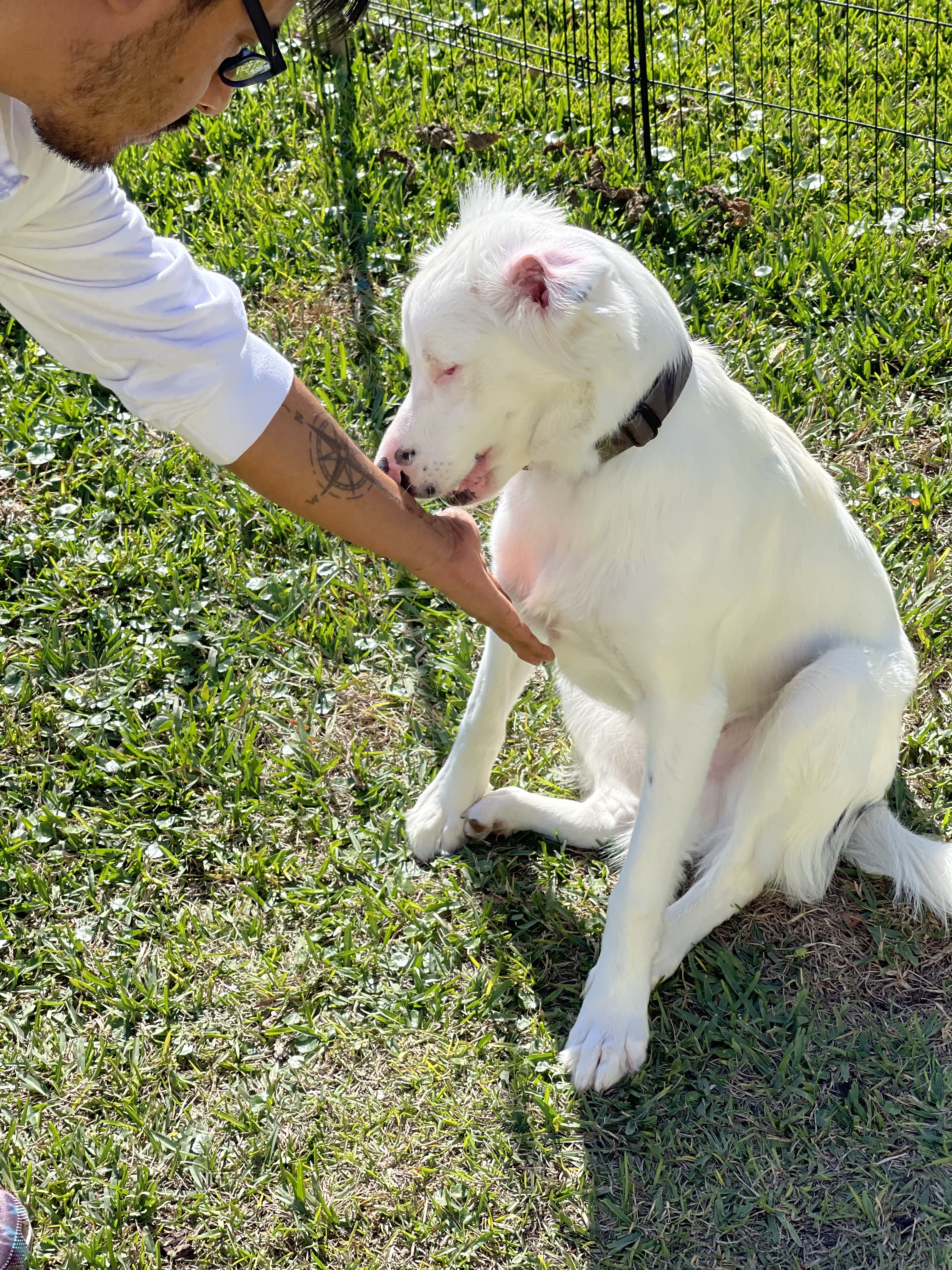
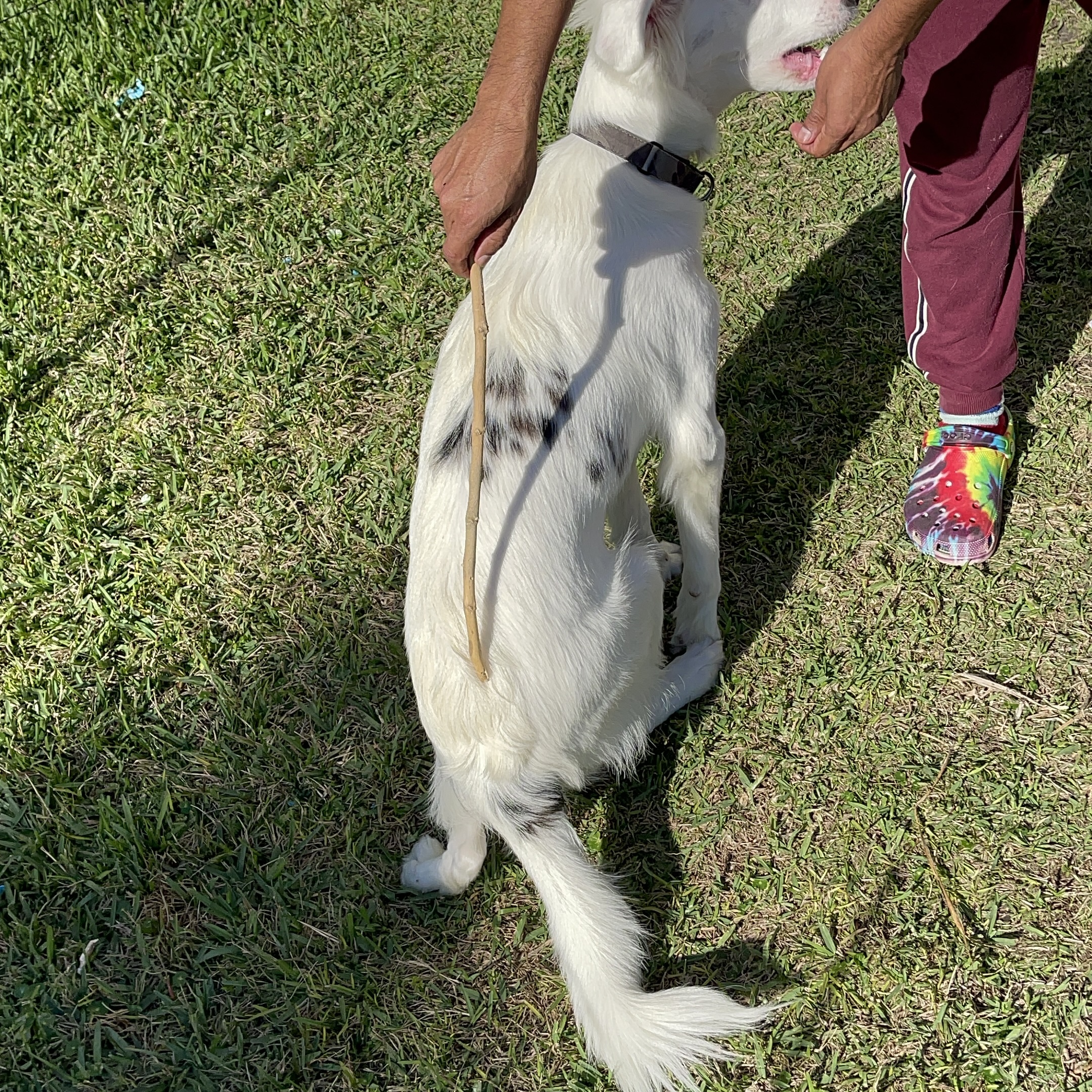
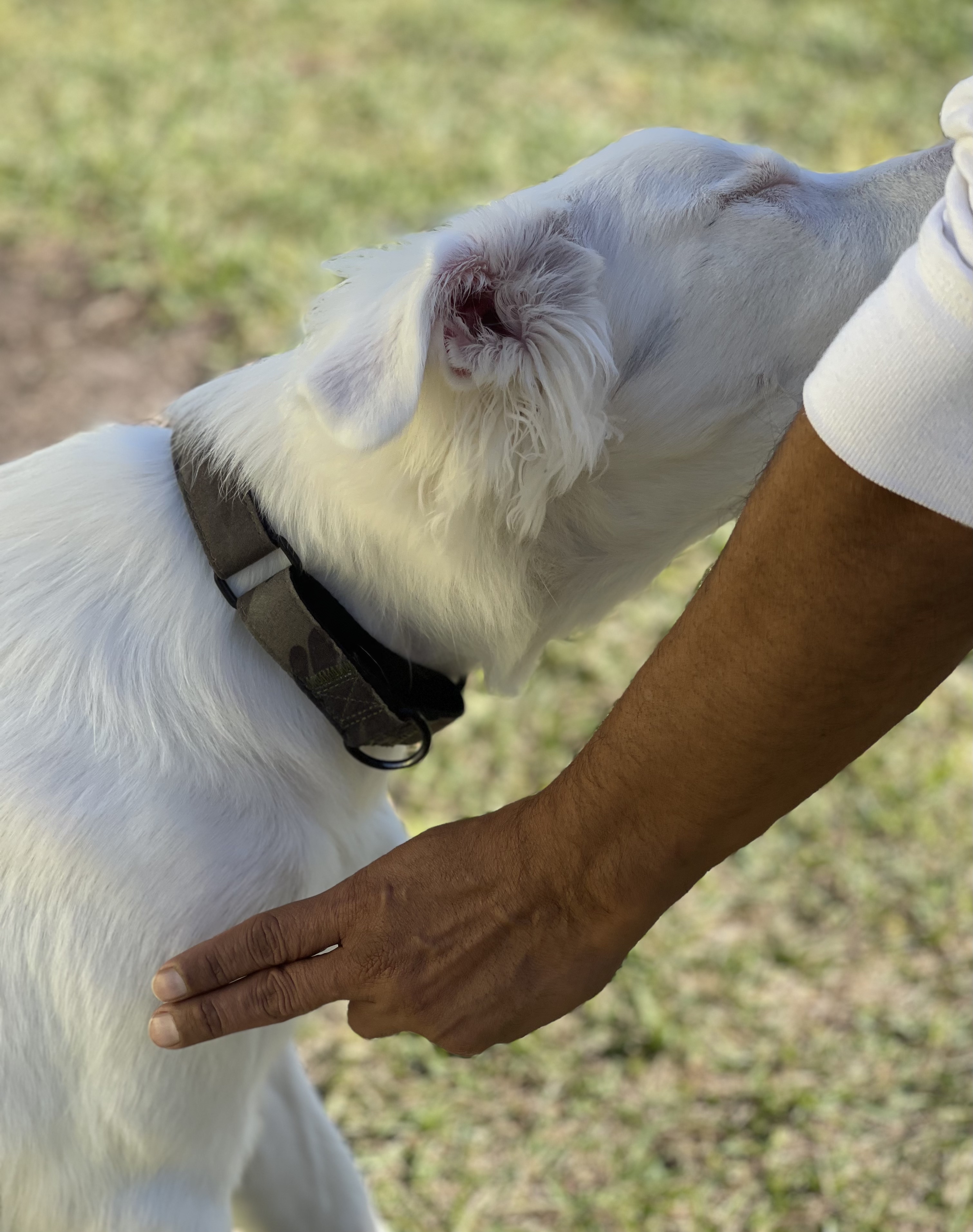
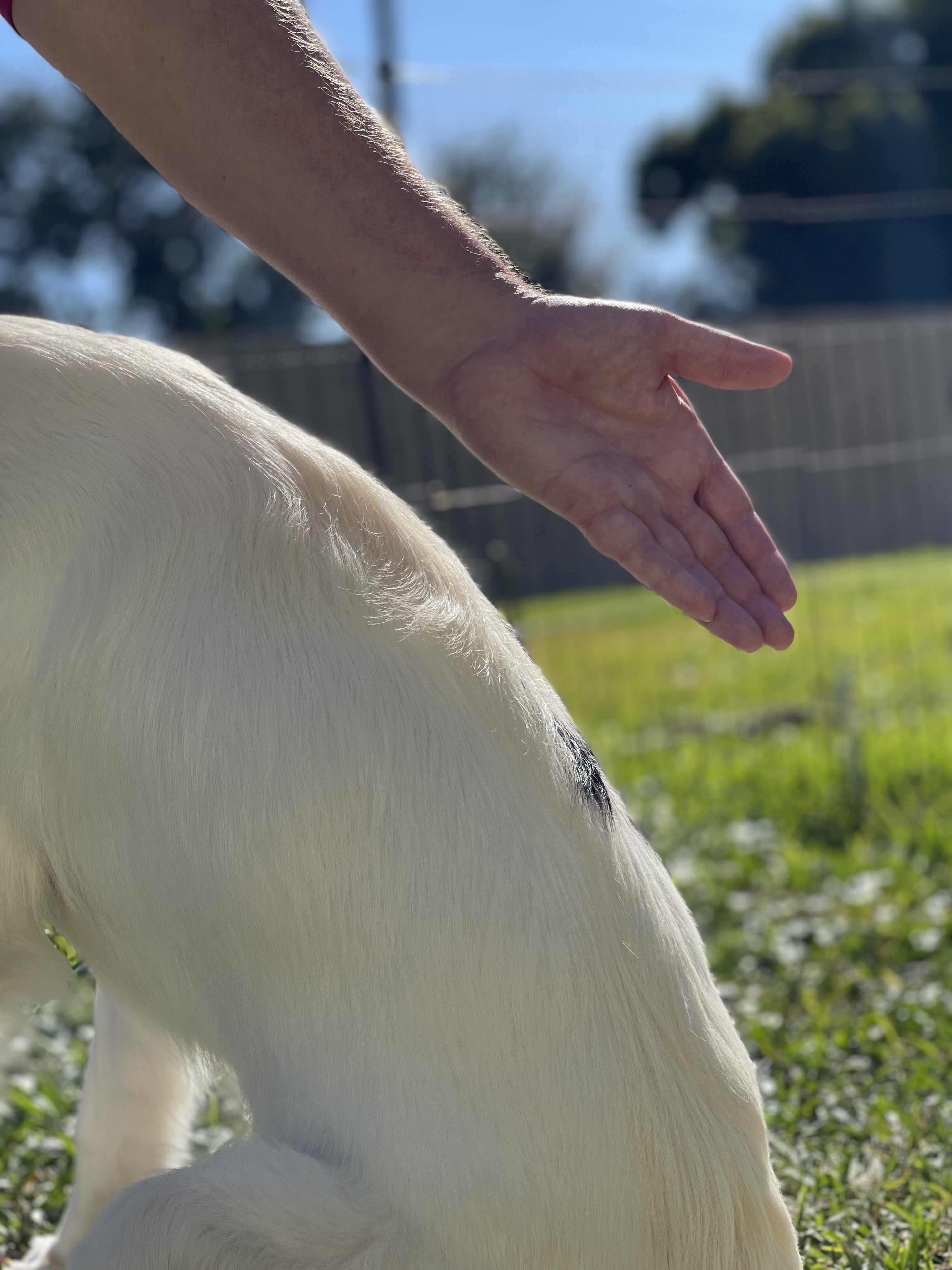
IMAGES OF TAP AND TOUCH COMMANDS DOGTOR YAKOO ALREADY COUNTS UPON:


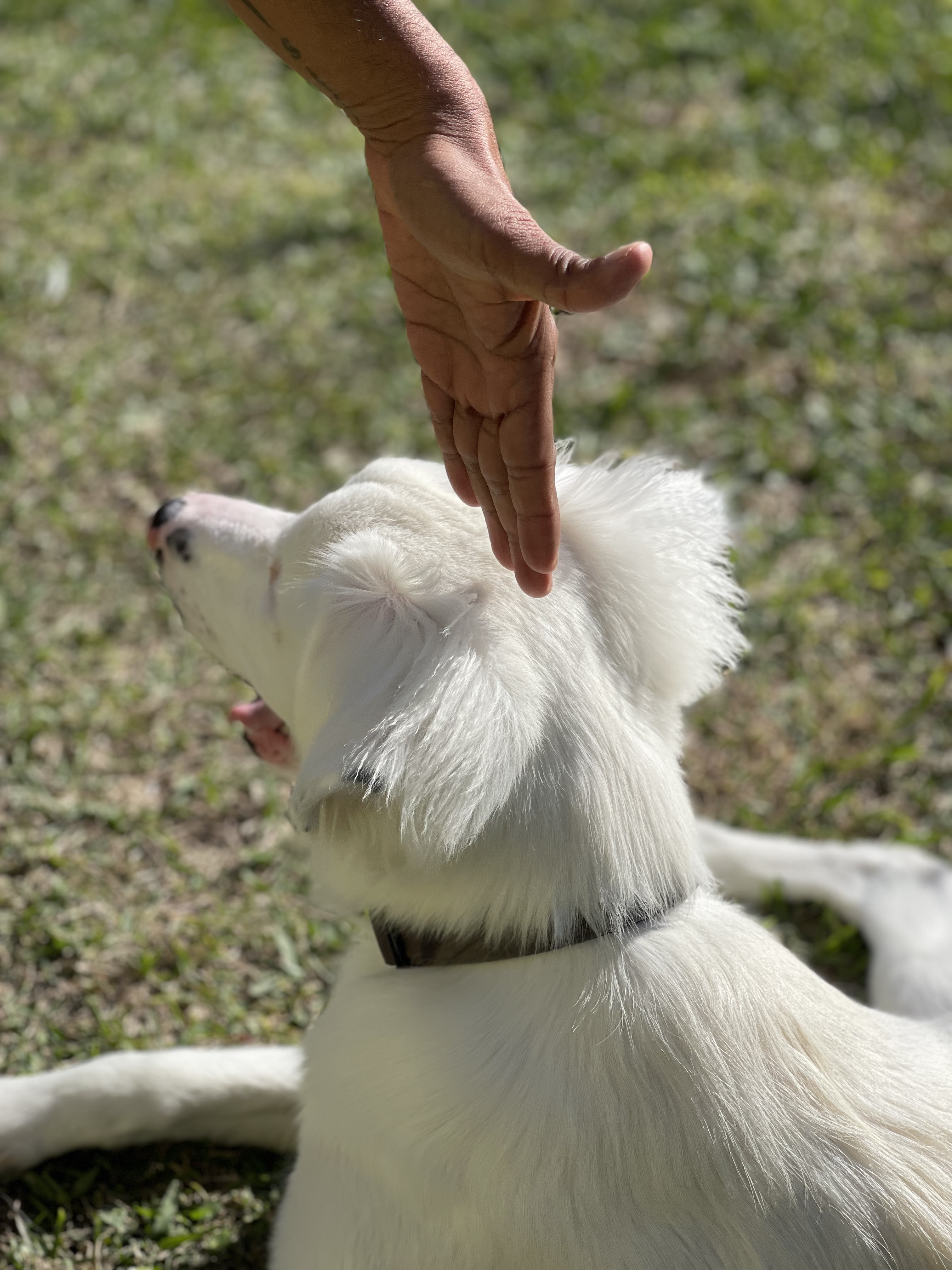
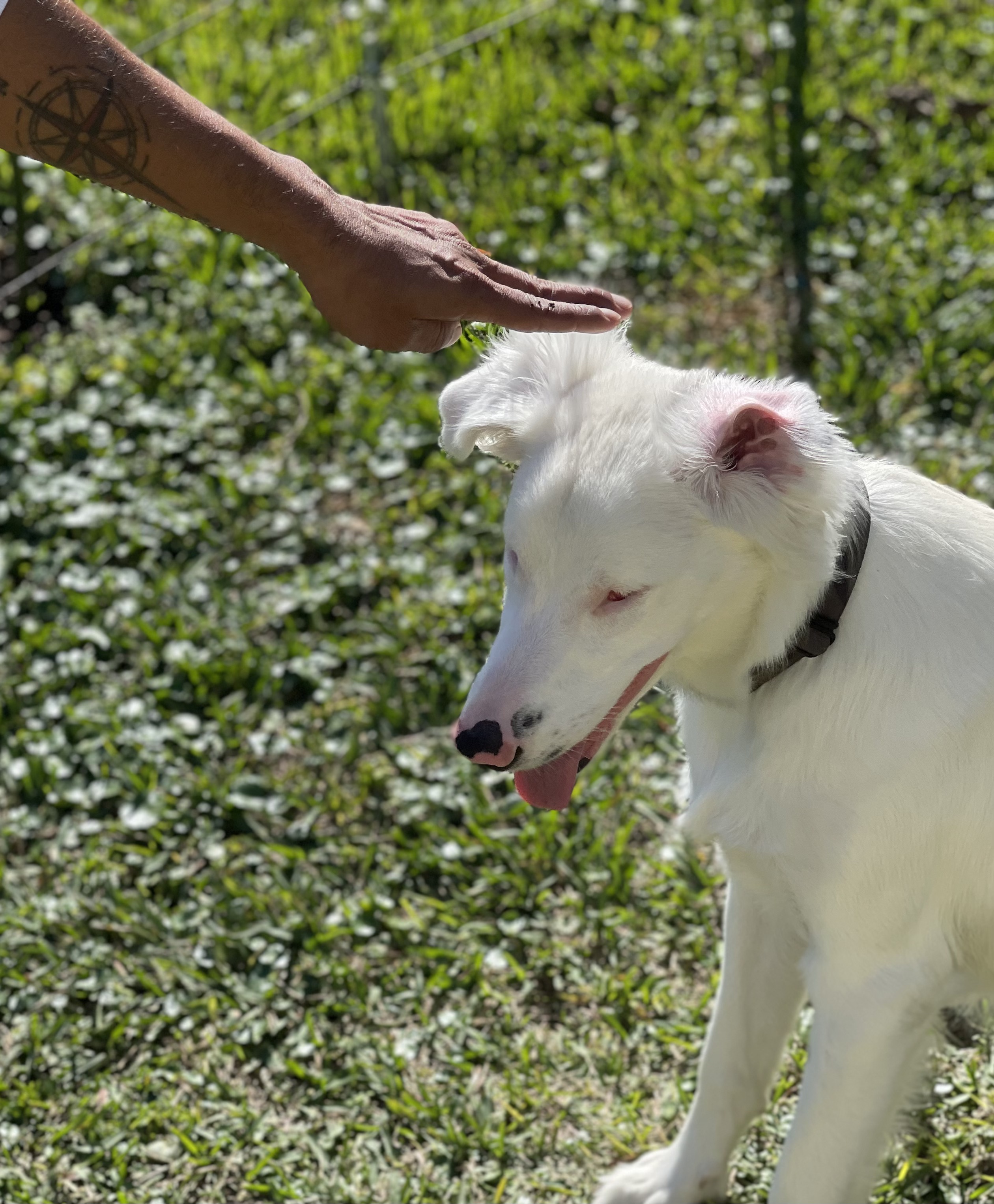

VIDEO LINKS COMING SOON! Youtube.com/DogtorYakoo
If you are anxious, click over to any of our social media platforms and watch for regular uploads. You’ll likely have fun and we know that Dogtor Yakoo loves the attention!
 DOGtor Yakoo's DEAFBLIND STORY